
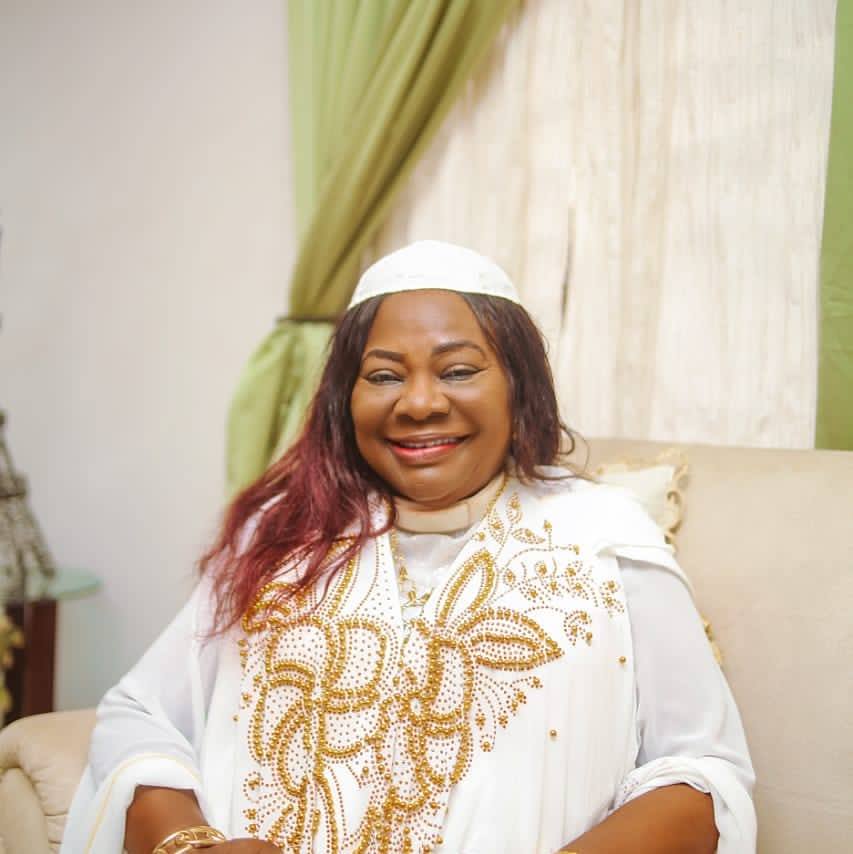
Inclusion, and Change Not Charity: A Call for Genuine Commitment to Disability Rights in Cross River State Ministry of Social Welfare and Community Development
In an era where the global discourse is centered on inclusion, equality, and justice for persons with disabilities (PWDs), it is disheartening to observe that Cross River State—under the dynamic and high-performing leadership of His Excellency Senator Prince Bassey Edet Otu, championing the ‘People’s First’ mantra—appears to be falling behind. Despite the growing global momentum to advance disability rights, the state’s recent actions reveal a troubling disconnect from this progressive and inclusive vision.
It is imperative that the Honourable Commissioner for Social Welfare and Community Development, Dr. Mrs. Margaret Ene-Ita, takes urgent steps to align the state’s initiatives concerning persons with disabilities with key international, regional, and national legal frameworks. These include:
- The United Nations Convention on the Rights of Persons with Disabilities (UNCRPD) and its Optional Protocol—commonly referred to as the Human Rights Treaties of the 21st Century—which Nigeria signed on March 30, 2007, and ratified on September 24, 2010, under the leadership of former Presidents H.E. Olusegun Obasanjo and H.E. Goodluck Ebele Jonathan, respectively;
- The Disability-Inclusive Sustainable Development Goals (Agenda 2030), which Nigeria committed to implementing in September 2015;
- The African Charter on Human and Peoples’ Rights on the Rights of Persons with Disabilities in Africa, signed by former President Muhammadu Buhari on February 10, 2020, and ratified by President Bola Ahmed Tinubu on October 23, 2023;
- The Discrimination Against Persons with Disabilities (Prohibition) Act, 2018, signed into law on January 23, 2019, by former President Muhammadu Buhari; and
- The Cross River State Disability Law No. 11 of 2021, signed by His Excellency Sen. Prof. Ben Ayade.
To ensure effective implementation, this process should begin with broad-based consultations and a study of successful disability-inclusive practices in neighboring states, adapting and tailoring these strategies to suit the unique needs and context of Cross River State.
Issues concerning persons with disabilities are fundamental human rights issues, supported by international treaties that strongly oppose the outdated charity and medical approaches often applied to them. These treaties emphasize that persons with disabilities should be treated as rights-holders and active subjects, not as objects of pity or medical intervention. Their concerns must be addressed with the utmost care, respect, and dignity, in full alignment with global human rights standards.

The recent distribution of mobility aids (wheelchairs), though well-intentioned, only reached a small fraction of the disability community. What about the needs of other disability clusters? This selective approach risks deepening division within the community, fostering sectionalism rather than unity.
Furthermore, the distribution of wheelchairs was carried out without proper consideration of individual needs. Wheelchairs must be tailored to the measurements and conditions of each beneficiary. For instance, many polio survivors eventually develop post-polio syndrome—a progressive condition that worsens with age. Distributing ill-fitting wheelchairs not only undermines their mobility but could also accelerate health complications.
A key question remains: was a comprehensive needs assessment conducted before deciding that wheelchairs were the most pressing requirement? We live in a data-driven world where policies should be informed by accurate data, not sympathy or assumptions rooted in outdated charity models. Such an approach contradicts Article 4.3 of the UNCRPD, which emphasizes the involvement of PWDs in decisions affecting their lives.
Moreover, there have been credible reports of beneficiaries owning multiple wheelchairs, with some allegedly selling the excess to hospitals and clinics. This undermines the integrity and purpose of government expenditure.
The distribution process also lacked equity. Reports indicate that the three senatorial districts were not fairly represented. Transparency is essential—how were the beneficiaries selected? What are their names and localities? Inclusion means visibility, and these details matter.
The current approach goes against the spirit of the UN Convention on the Rights of Persons with Disabilities and disability disability-inclusive Sustainable Development Goals’ (SDG) principle of “Nothing About Us Without Us” and “Leave No One Behind.” These are not mere slogans; they are calls to action that demand genuine participation, inclusion, and accountability.
In light of these shortcomings, I, a devoted and unapologetic member of the All Progressives Congress (APC)—a person with a disability who is well-traveled and well-learned—cannot, in good conscience, remain silent in the face of these anomalies. I think the Ministry of Social Welfare and Community Development under the administration of our amiable and charismatic Governor, His Excellency Sen Prince Bassey E. Otu, can do more than that. My intention is not to undermine the Honourable Commissioner for Social Welfare and Community Development, Bishop (Hon.) Dr. Margaret Ene-Ita, whom I acknowledge as a preacher of the Gospel of our Lord Jesus Christ and a mother superintending over the affairs of persons with disabilities in Cross River State. Rather, I express my respectful disagreement with the recent actions taken by her office, which, in my view, do not serve the best interests of persons with disabilities in Cross River State. These decisions run contrary to the spirit and vision of the “People First” agenda championed by His Excellency, Senator Prince Bassey Edet Otu, which aligns with best international practices.
Job Napoleon Agbor ACFE,
The APC Voice of the Voiceless for PWDs
Convener, Pioneers of Nigeria’s National and International Disability Civil Rights Movement and Policy Changer Advocates
Committed Member: APC Etomi Ward, Etung LGA of CRS