

A Bold Stand for Justice and Equity: PWD Leader Denounces & Rejects OJIANA Urunnevo Village, Enugwu-Ukwu Award
Chief Eric NdubuezeUfom, a Globally renowned Disability Civil Rights Activist and advocate for persons with disabilities (PWDs) and President and CEO of Equal Rights for Persons with Disabilities International, Inc. (ERPWDI), based in Houston, Texas, United States of America has denounced and rejected the “Pillar of Great Community” award from the OJIANA Umunwankwu, Urunnevo Village, Enugwu-Ukwu Nri Kingdom of Anambra State, Nigeria. His decision, announced in a letter dated December 25, 2024, reflects his commitment to truth and equal rights to justice.

In his letter addressed to the leadership of OJIANA Umunwankwu, Urunnevo Village, Enugwu-Ukwu—comprising Chief Chika Okeke (Chairman), Hon. Engr. T.C. Omalu (Secretary), and Mr. Ikechukwu Okekearu (Chairman of the Awards Planning Committee)—Chief Ufom highlighted concerns over systemic neglect, the denial of due process, the absence of fair procedures and equal protection, as well as the prevalence of cruel and unusual punishments, mismanagement, and the organization’s failure to address critical developmental issues. These issues, he noted, disproportionately affect women, youths, and persons with disabilities (PWDs), particularly victims of multiple traumatic head/brain injuries.
The letter, which was also copied to His Excellency Prof. Chukwuma C. Soludo, Governor of Anambra State, expressed profound disappointment at the erosion of the values historically associated with the Nri Kingdom.
Chief Ufom, an indigene of Urunnevo Ozom Village in Enugwu-Ukwu, expressed deep concern over the Nri Kingdom’s departure from its centuries-old legacy of upholding truth, justice, and human dignity. He reminisced about the kingdom’s historical significance as one of Nigeria’s oldest kingdoms and democracies, established as far back as 900 AD. The Nri Kingdom once stood as a beacon of cultural preservation and human rights, championing the protection of vulnerable groups such as slaves, persons with disabilities—particularly those with albinism and dwarfism, including victims of traumatic head injuries, and other marginalized individuals.
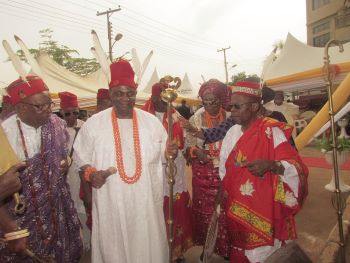
However, he criticized the current leaderships of the OJIANA Umunwankwu, and Urunnevo Improvement Union (UIU) of Enugwu-Ukwu for fostering a toxic culture throughout the community, especially, persons with disabilities and its victims of Multiple Traumatic Head/Brain Injuries marked by impunity, unresolved disputes, and the denial of due process. According to Chief Ufom, these failures have led to the degradation of the kingdom’s reputation, which once rivalled that of the Zulu Kingdom with its Ubuntu philosophy.
Chief Eric Ufom spoke with a heavy heart as he detailed the challenges that had tarnished the legacy of the Enugwu-Ukwu and the broader Nri Kingdom. He described a Kingdom once known for unity and justice, now marred by bitter infighting and a pervasive culture of impunity amongst different Enugwu-Ukwu factions of Ozo Nkpu Title Holders. Rival factions constantly vied for supremacy, leaving community disputes unresolved and fostering an environment of toxic, stressful, traumatic division and distrust.
The systemic decades of unquestioned denial of due process against persons with disabilities, especially victims of multiple Traumatic Head/Brain Injuries, Chief Ufom lamented, was another glaring issue. The leadership had failed to uphold constitutional, customary, and cultural protections, eroding the community’s faith in fairness and justice. He recounted instances of cruel and degrading treatment, particularly against persons with disabilities (PWDs), some of whom bore the scars of multiple traumatic brain injuries. These individuals, among the most vulnerable, faced inhumane conditions in a society that had once prided itself on protecting the marginalized.
Chief Ufom lamented what he described as the most painful betrayal—the sabotage of the Ngwu Ezi Egbo OJIANA and Agu Urunnevo Disability and Women-Inclusive Grassroots Initiative. These ambitious projects, collectively valued at over one billion naira, were envisioned as a center for disability- and women-inclusive STEM education, arts and cultural preservation (STEMAC-Education), and entrepreneurship. The initiative had the potential to transform the region into a “Mini-OZOM Silicon Valley,” fostering innovation and empowerment in the 21st-century Nri Kingdom and providing a beacon of hope for a community yearning for progress.
Unfortunately, this vision was derailed by a toxic culture of impunity, infighting for supremacy, and the absence of visionary leadership. As a result, countless individuals—particularly women, youths, and persons with disabilities—have been deprived of opportunities for growth and development. Chief Ufom described the sabotage of these transformative projects as a glaring example of mismanagement and envy, underscoring the urgent need for leadership that prioritizes the community’s welfare and future.
As he reflected on these failures, Chief Ufom’s voice carried both sorrow and determination. The Nri Kingdom, he believed, could no longer afford to ignore these issues. Its once proud legacy was at stake, and only a collective commitment to truth, justice, and accountability could restore its former glory.
Chief Ufom stressed that the OJIANA Umunwankwu, Urunnevo Village and Enugwu-Ukwu must prioritize introspection and repentance rather than focusing on awards and projects that ignore fundamental values of truth, equal rights to justice, and human dignity. He underscored the urgent need for systemic reform to restore the Nri Kingdom’s legacy and its divine calling to protect the rights of all individuals, including persons with disabilities (PWDs), especially victims of Multiple Traumatic Brain Injuries (MTBI).
Drawing a parallel between the decline of the Nri Kingdom and broader governance challenges in Nigeria, Chief Ufom emphasized the importance of implementing disability rights laws and international treaties, such as the UN Convention on the Rights of Persons with Disabilities and Nigeria’s 2018 Disability Act and Anambra State Disabilities Rights law, 2018. He announced plans to launch a boot camp to train committed Nigerians on these frameworks, expressing hope that the Nri Kingdom would embrace its historic role in advancing these ideals.
Chief Eric Ufom’s rejection of the “Pillar of Great Community” award is a bold statement against complacency and injustice against Women, Youths and Persons with Disabilities, especially victims of Multiple Traumatic Brain/Head Injuries. By holding the OJIANA Umunwankwu, Urunnevo Village and Enugwu-Ukwu at large accountable, he has reignited a critical conversation about leadership, development, and human dignity in the Umu Nri Kingdom, especially Enugwu-Ukwu and beyond. His call for reform serves as a reminder that meaningful progress requires a steadfast commitment to truth, equal rights to justice, and the protection of the most vulnerable women, youths and persons with disabilities, especially, victims of multiple Traumatic Head/Brain Injuries.
Published by
Job Napoleon Agbor, ACFE, B.Sc., M.Sc., MBA, Ph.D. in view: Forensic Accounting and Investigation (aka Hurricane),
Convener:
Pioneers of National & International Civil Rights Movement and Policy Changers in Nigeria
Phone: +234 (705) 844-7521, Email: jobnsoragbor53@gmail.com